The Mic Is Cheap: Why Northampton Fan Nights Should Hand It Over for Five Minutes
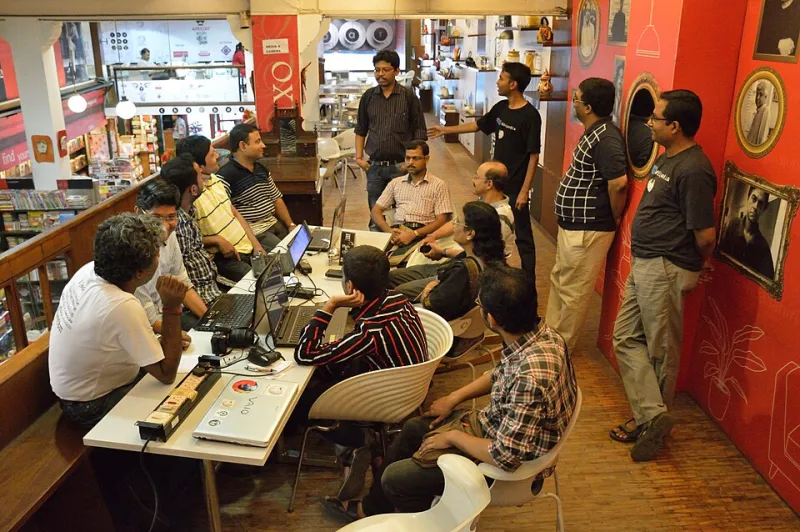
Photo: Biswarup Ganguly, CC BY 3.0, via Wikimedia Commons
Northampton fan nights have a familiar rhythm. People arrive, hover near the biscuits, and talk about the thing everyone already knows. That’s fine — it’s how most of us start. But there’s often a quiet fan near the edge of the room with an obsession that would light up the whole evening if anyone gave them a doorway. Not a panel. Not a TED talk. Just five minutes and a bit of structure.
That’s the case for a show-and-tell slot at Northampton meetups: a short, hosted pitch where anyone can explain a niche fandom, a build, a collection, a strange corner of the internet, or a local discovery. It is cheap to run, easy to repeat, and surprisingly good at turning a room of polite nodding into an actual conversation.
Five minutes is long enough to be interesting and short enough to be safe
The length matters. Ten minutes starts to feel like a lecture. Two minutes can feel like a trapdoor. Five minutes gives someone room for a beginning, a middle, and an invitation to keep talking afterwards. It also limits the damage if a pitch doesn’t quite land. The host can thank them, ask one friendly question, and move on without anyone’s evening collapsing.
A show-and-tell slot should not be a test of expertise. The best pitches are not the most comprehensive ones. They are the ones where the speaker clearly cares, and where the audience can see a way in. ‘I got into this because…’ is a stronger opening than a timeline of publication dates. One object on the table is stronger than forty slides. A recommendation at the end — a book, a forum, a cheap kit, a shop in town — gives people something to do with the five minutes they’ve just spent.
The shape of a kind slot
Run it like a small ritual, not an open mic free-for-all. A host introduces each speaker, keeps an eye on the timer, and handles the questions. Three to five pitches is plenty for a fan night; more than that and the evening becomes a conference. Ask for volunteers in advance, either by message or on a sign-up sheet at the previous meet. Do not volunteer people on the night, even affectionately. The whole point is that the microphone is offered, not imposed.
A simple structure works: thirty seconds to set up who you are and what the thing is, three minutes to show or tell, and one minute for a question or two. The host should have a rescue question ready — ‘What’s the one thing you wish people knew about it?’ is a good one. If someone freezes, that question gives them a soft landing. If someone runs over, a visible timer and a friendly ‘one more minute’ card does the job better than a bell.
Make the physical setup kind, too. A microphone if the room is noisy. A seat if the speaker wants one. No requirement to stand behind a table or perform. A quiet corner nearby for anyone who needs a break from the attention. And a host who thanks each speaker by name, specifically, rather than a general ‘big hand for everyone’. The tiny details are the difference between a slot that feels like a dare and one that feels like a welcome.
Choosing a topic that lands
The best five-minute pitches are specific, personal, and slightly unfinished. They don’t try to cover everything. They pick one story: the charity-shop find that started a collection, the homemade armour piece that went wrong twice before it went right, the obscure cartoon that nobody else at the meet has heard of, the local archive discovery, the board game that only works with exactly four people and a lot of patience.
A useful rule is: one feeling, one object, one invitation. Why you love it, something the audience can see or imagine, and a way to find out more. That keeps the pitch from turning into homework. It also stops the familiar fandom trap of correcting the audience. A show-and-tell slot is not the place for ‘actually, you’re wrong about issue forty-two’. It is the place for ‘here’s the bit that made me care’.
Northampton gives people plenty of material. A pitch about a bus route to a tiny model shop, a repair job done with borrowed tools, a fanfic trope that somehow explains your whole week, or a corner of the Central Library that has been quietly useful — all of these land because they are grounded. They give other people a hook. They make the niche feel less like a locked room and more like a door left ajar.
The quiet-room problem
Any invitation to speak can also be a reminder of who usually gets heard. So keep the slot optional, keep it early enough that nerves don’t build all evening, and let people pass without comment. If someone wants to pitch but doesn’t want to stand alone, let them bring a friend up with them. If someone wants to show an object and say almost nothing, that counts. The host can fill the gaps with gentle questions.
It also helps to have a co-host or a second pair of eyes on the room. Watch for the person who looks interested but is edging towards the door. Give them an easy exit and an easy way back in. The five-minute slot is not a cure for social anxiety, and it shouldn’t be sold as one. It is simply a small, structured chance to be heard — and a small, structured chance for everyone else to listen.
Why this tiny ritual changes a meetup
A show-and-tell slot does something that a general chat night often can’t. It reveals the hidden expertise in the room. It gives new people a reason to come back next month. It creates follow-up conversations that don’t depend on alcohol, loud music, or already knowing the right people. It also makes the organisers’ job easier, because the evening has a shape and a few natural talking points.
And it costs almost nothing. A timer, a sign-up sheet, a host, and five minutes of goodwill. Northampton’s fandom scene runs on volunteers, borrowed rooms, and people willing to put the chairs out. This is a good return on that effort. It doesn’t need a convention budget or a stage. It works in a library room, a back room, a community hall, or the quiet end of a pub.
So give the quiet fan five minutes. Not to prove themselves, not to perform expertise, but to open a door. The mic is cheap. The room is already there. The only thing missing is the small, kind ritual of handing it over.