Two Sockets and a Strip of Gaffer Tape: Inside Northampton's Charging Table Culture
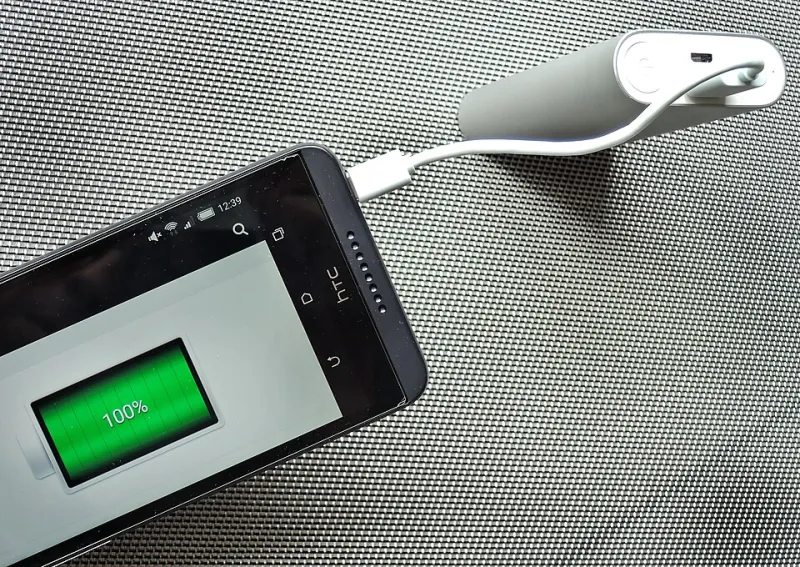
Photo: Mk2010, CC BY-SA 4.0, via Wikimedia Commons
There is a moment at every Northampton con, usually somewhere between the first cosplay photo rush and the afternoon slump, when a small crowd forms around a table that was empty an hour ago. Nobody announced it. Nobody put it on the schedule. It's just the charging table — a tangle of cables, a multi-plug extension, a roll of masking tape and a laminated sign that says something like PLEASE LABEL YOUR PHONE in increasingly desperate capitals.
It is, pound for pound, the most useful square metre in the hall.
The Table Nobody Plans For (Until They Do)
For years the charging desk at Northampton fan meets was an accident. Someone's bag had a four-way adapter in it, a plug socket was discovered behind a stack of chairs near the stage, and by mid-afternoon half the room's mobile phones were lined up like ducklings.
These days a few local organisers actually build it into the plan, and the difference is enormous. A proper charging desk usually means a named volunteer, a table near a wall socket rather than in a corridor, a couple of USB multi-port hubs, and a clear sign explaining that devices are left at your own risk — because they are.
The best versions also have a small box of borrowed power banks. More on that in a minute.
What Actually Goes Wrong
Most charging-table problems are not dramatic. They are small, silly and entirely preventable.
The unlabelled phone. Twenty identical black rectangles on a table, and one person hovering awkwardly trying to work out which is theirs. Masking tape and a biro solve this in four seconds.
The mystery cable. A cable gets borrowed, handed to a friend, and never returns. If you bring a lead, put your name on it. If you borrow one, hand it back to the person running the desk, not to the crowd in general.
The single-socket traffic jam. One plug, six phones, nobody charging fast because everything is sharing the slowest possible trickle. Multi-port hubs with proper output exist and cost less than a cinema ticket.
The hot battery. Anything that is swelling, unusually warm or making a noise should come straight off the table and out of the room. Volunteers should be told this clearly and be allowed to say no.
Small stuff. But small stuff handled well is the difference between a useful amenity and a nest of resentment.
Why Cosplayers Care More Than Most
If you have ever built a costume with LEDs in it, you already know the dread of the mid-afternoon dimming. A glowing visor that looked magnificent at eleven o'clock can be a sad amber flicker by half two, and there is no recovering that for the photos.
Northampton's armour-and-foam builders have developed a rough etiquette for this. Spare AA and AAA batteries get shared around before the event on the local group chats. Someone always brings a USB power bank in a pocket with a short cable running up inside the costume, which is a genuinely clever workaround — just make sure the pack is somewhere it won't press into you for six hours.
And please, if your prop has a lithium cell in it, don't leave it unattended on a communal charging table while you go and queue for a photo with a stranger in a very tall hat. Charge it in sight, or take it with you.
The Power Bank Loan Economy
Here is the bit that isn't really about electricity.
Somewhere along the way, borrowing a power bank became the Northampton scene's standard small favour. It's a low-stakes thing to ask for and a low-effort thing to give, which makes it the perfect currency for people who don't yet know each other well.
You spot someone crouched by a pillar, phone at four per cent, trying to pull up a digital ticket that will not load. You hand over a pack. They say thank you about four times. Twenty minutes later they come back, slightly breathless, and you have a conversation about the queue for the café and the fact that their costume took three weekends and a hot glue gun.
That's it. That's the whole transaction. But it's how a lot of people in this town have met their first con friend.
The unwritten rules are simple enough. Return it charged, or at least not completely flat. Don't vanish with it. If you're the sort of person who regularly carries one, consider carrying two.
For the Volunteers Holding the Desk
If you're running a meet at a village hall, a church room or one of the town's rented spaces, a few practical notes.
- Check with the venue before you assume the sockets are yours to use. Some halls charge extra or have rules about it.
- Tape every cable down where people walk. A trip in a hall full of people in long cloaks and platform boots is not a hypothetical.
- Keep the desk staffed. An unattended table of strangers' phones is an invitation to a bad afternoon.
- Put a clear sign up with the rules, and laminate it, because it will get knocked over.
- Have a plan for the last half hour. The desk should close before the hall does, so nobody's phone is locked in a building overnight.
And say thank you to whoever ends up sitting there, because it's one of the least glamorous jobs at any event. They will spend the afternoon untangling leads and reassuring anxious people, and they will almost certainly miss the thing they came to see.
Before You Set Off
The genuinely useful advice for a Northampton fan day out is dull and takes two minutes. Charge everything the night before. Bring your own cable with your name on it. Carry a power bank if you have one, and if you don't, they're cheap enough now that it's worth the investment — you'll use it at every event for years.
Screenshot your tickets. Save your travel details offline. Turn your brightness down.
Then get on with the good part: the costumes, the queues, the people you haven't met yet. The charging table will be there if you need it, with a borrowed cable and a volunteer who has already untangled worse.