The Fix-It Bench: Hot Glue, Borrowed Snaps and the Volunteers Saving Northampton Costumes
There is a particular sound at every Northampton meetup, somewhere between the coffee queue and the photo corner. It is the sound of a strap giving way. A buckle letting go. A zip announcing that it has done its duty and would like to retire now, thank you very much. And then, usually within thirty seconds, someone says the same six words: "Is there a repair table anywhere?"
Increasingly, in this town, the answer is yes.
Two Tables, One Queue
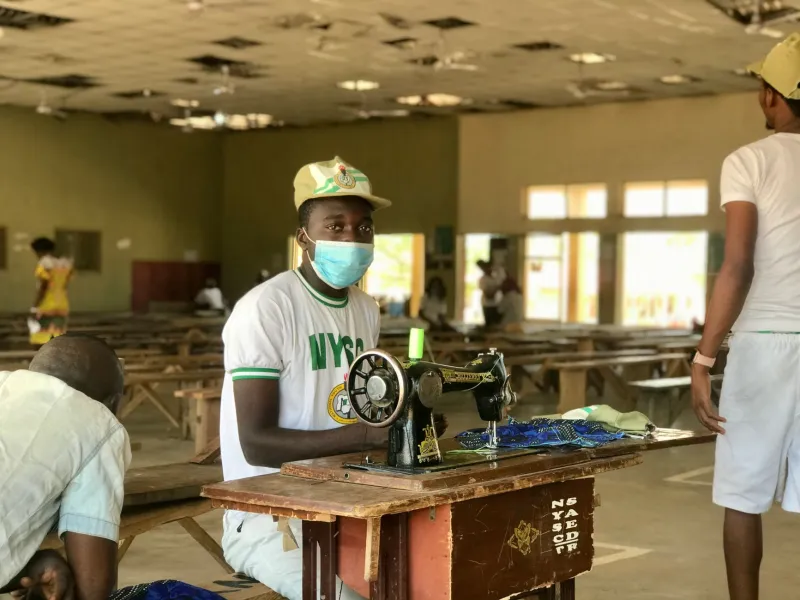
You will spot it before you reach it. A folding table pushed against a wall, covered in a slightly chaotic geography of sewing machine, extension lead, tubs of pins and a squeeze bottle of fabric glue that has clearly been through several events already. Next to it, a second table that holds the odd stuff: snap setters, rivets, spare elastic, three wig caps in different shades, a hairdryer duct-taped to a shoebox and a small box labelled "ears (assorted)".
The people running it are not staff. They are fans who happened to bring a machine along, or who said yes when an organiser put out a call in the group chat for anyone who can thread a needle without swearing. Some of them are genuinely skilled. Some of them own a hot glue gun and a lot of confidence. Both are welcome.
What Actually Breaks (A Field Guide)
Spend a couple of hours at one of these benches and you start to see patterns. The same five failures come up again and again.
- Straps and harnesses. Always. Usually where a buckle is sewn on with two stitches and hope. The fix is unglamorous: unpick, reinforce, reattach, and accept that you now have a visible line of thread.
- Velcro that has given up. Foam armour is the biggest offender. Velcro on painted EVA foam either sticks forever or peels off in the first five minutes, and there is rarely a middle ground.
- Zips on fitted garments. Bodices, jumpsuits, boots. Often fixable with a pair of pliers, some wax or a bit of pencil graphite if you are desperate.
- Wigs that will not stay put. Wig caps run out fast, hair grips even faster. A surprising number of rescues are just a borrowed cap and somebody showing you how to cross two pins properly.
- Soles, toes and hems. Boots that have flapped open, a hem that has been trodden on since 9am, a foam foot that has lost its grip on a tiled floor.
What almost never gets repaired? Anything structural that took someone forty hours to build. If a big prop or a full armour set fails catastrophically, the bench's job is usually damage limitation — a temporary splint so you can get through the day and fix it properly at home.
The Tin That Saves Your Weekend
The good news is that you do not need a repair station to avoid most of this. You need a small tin, roughly the size of a spectacle case, that lives in your bag and never comes out at home.
What goes in it:
- Four safety pins, in two sizes.
- A needle already threaded with black and one with white, because you will not thread one on site.
- A handful of hair grips and two small elastic bands.
- A few inches of self-adhesive Velcro.
- Superglue, in a tiny tube, in an outer bag, because it will leak.
- One spare wig cap, if you wear wigs.
- Plasters. Not glamorous, but the person who needs one is never the person who brought them.
That is it. It weighs almost nothing and it handles nine out of ten of the failures above. Guests who bring a full toolkit often end up lending half of it out anyway, which is rather the point.
Why a Two-Pound Table Says More Than a Big-Budget Con
Here is the thing that sticks with you. These benches usually run on an honesty box. Two pounds for a repair, or nothing if you have no cash, or a chocolate bar, or a promise to volunteer at the next event. Nobody is checking.
Big conventions sell you a branded lanyard and a hall the size of an aeroplane hangar. What they cannot sell you is the moment a stranger kneels on a cold floor to pin up the hem of your costume ten minutes before judging starts. That is not a service. That is a community deciding, collectively, that nobody's weekend gets ruined on its watch.
It also quietly lowers the cost of taking part. If you know there is a safety net, you are more willing to attempt the ambitious thing, to wear the outfit that is 80 per cent finished, to turn up at all. Repair tables are, in a very literal sense, an accessibility measure — and one of the cheapest a local scene can offer.
If You Want to Help
Organisers in Northampton are usually short of two things: machines and hands. If you can sew a straight line, set a snap or even just hold a torch steady, offer. A second-hand machine from a charity shop on Wellingborough Road will do the job. So will an hour of your time on a Saturday.
And if you are the one in the queue with a broken strap, do not apologise for it. Turn up, sit down, hold still. Somebody will be there with a needle before you have finished explaining.