The Fifteen-Pound Hero: A Second-Hand Cosplay Crawl Through Northampton
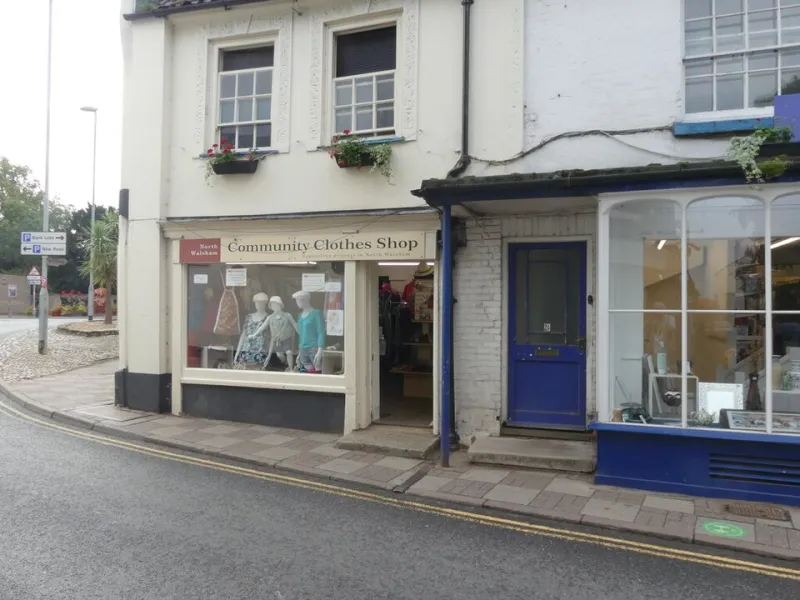
Photo: David Pashley , CC BY-SA 2.0, via Wikimedia Commons
Cosplay budgets have a way of evaporating. You start with a simple plan — a cloak, maybe a belt, perhaps one brooch — and somehow end up pricing EVA foam, resin and a weekend courier delivery. Northampton's charity shops offer a quieter, cheaper route. They are not costume departments, and that is the point. You go in looking for raw material, not a ready-made Harley Quinn. The fun is in the rummage.
This is a crawl, not a shopping spree. Set yourself a ceiling — £15 for the whole loop is a good challenge, or £25 if you are hunting a coat — and treat every find as a small win. Carry a tote bag, a tape measure, a photo of the character and a list of three things you actually need. A list of three is important. A list of thirty is how you come home with a lampshade and no plan.
Start with the town-centre cluster
Northampton's charity shops work best as clusters rather than a single grand tour. Start around the Market Square and the Drapery, then drift towards Abington Street and Gold Street. If you have energy left, the Wellingborough Road stretch is a longer walk with a different mix of stock. Do not try to do all of it in one afternoon. Pick one cluster, check opening hours before you go — many shops close by 5pm and some are shut on Sundays — and leave room for a tea stop.
The route matters less than the mindset. You are not shopping for a costume. You are shopping for fabric, fastenings and shapes. A curtain can become a cloak. A duvet cover can become lining. A leather-look skirt can become a belt pouch or a pair of bracers if you are brave with a craft knife. A chunky necklace can become a crown, a chestpiece or a very good reason to own a hot glue gun.
What to grab when you see it
Fabric is the obvious prize. Look at curtains, duvet covers, tablecloths, scarves, men's shirts, wool coats and heavy skirts. Check the fibre content if there is a label. Natural fibres usually take dye better; synthetics can still be brilliant for armour, linings and anything that needs to hold a shape. Hold the fabric up to the light. If it is see-through when it should not be, or so stiff that it cracks when you fold it, leave it for someone else.
Hardware is where charity shops quietly excel. Belts, handbags, jewellery, curtain rings, napkin rings, picture frames, old toy boxes, decorative trays and fake flowers all have cosplay potential. Look for buckles on broken belts, brooches with a good back, chains that can be shortened and bags with useful straps. A 50p brooch can save a whole outfit. A £2 handbag can donate its clasp to a far grander project.
Props are trickier. Charity shops are not prop warehouses, and you should not expect a rack of foam swords. But candlesticks, baskets, small boxes, plastic toys, mirrors and picture frames can all become something else with a lick of paint. Check anything electrical before you buy it, and remember that a prop that looks brilliant in the shop may be a nightmare on the bus. If it does not fit in your tote, ask yourself whether you really need it.
Ask about the back room — politely
Many charity shops have donations that have not yet been priced or put out. You can ask, but ask well. Try something like: 'I'm making a costume and I'm looking for fabric, belts or jewellery. Do you have any unsorted donations you'd be happy to sell?' Do not ask to rummage through the stockroom. Do not sigh when the answer is no. Volunteers are not search engines, and the back room is often a health-and-safety zone as much as a storage space.
If staff say yes, be quick, be grateful and buy something even if the perfect item is not there. If they say no, thank them and move on. You can always come back another day. It also helps to ask about fitting rooms, returns and whether items are sold as seen. Charity shops are not uniform on this, and a two-minute conversation at the till saves a lot of guesswork later.
The charity-shop etiquette bit
Buy first, alter second. Do not cut buttons off in the shop, do not pin hems while wearing the item and do not test a belt by yanking it like you are starting a lawnmower. If you want the buttons, buy the garment. If you are not sure it fits, use the fitting room or ask about measurements. Do not haggle. The price is already doing a job for a good cause.
Wash second-hand clothing before you wear it, especially anything that will sit against your skin. Check seams, underarms, hems and fastenings before you commit. A missing button is fine; a mysterious stain that has set since 2019 is less fine. And if you are buying a proper winter coat just to cut it up for a one-off costume, pause. Someone else might need that coat as a coat.
Altering is part of the build
Second-hand pieces are already made, which is their secret advantage. You are re-fitting, not building from zero. Take in seams, shorten hems, add trim, swap buttons and dye fabric if you have the space. Keep the original fastenings where you can. A good coat can become a great coat with new buttons and a bit of trim. A plain dress can become a costume with a sash and a brooch. A leather belt can become straps, tabs and buckles for armour.
Practice on scrap first. Charity-shop fabric is cheap enough to make mistakes with, but it is not free. If you are altering something with a lining, turn it inside out and look at how it is put together before you start cutting. And if you are using second-hand jewellery, check that the back is comfortable and secure. A beautiful brooch that scratches through a costume is not a bargain.
Keep the high street in the loop
Charity shops get you most of the way, but not all of it. Northampton's market and independent shops are where you find proper thread, snaps, elastic, needles, glue and the odd buckle that charity shops cannot supply. A cobbler can punch leather; a dry cleaner can press a cloak; a haberdashery stall can save a whole weekend. Use them for the last 10 per cent of the build, and the whole costume gets better.
Sustainable cosplay is not a slogan. It is a curtain that becomes a cloak, a brooch that gets a second outing and a £15 afternoon that turns into something you actually wear. The best charity-shop cosplay is not the most complicated one. It is the one you finished, wore and enjoyed. Start small, ask nicely and leave the shop tidier than you found it.